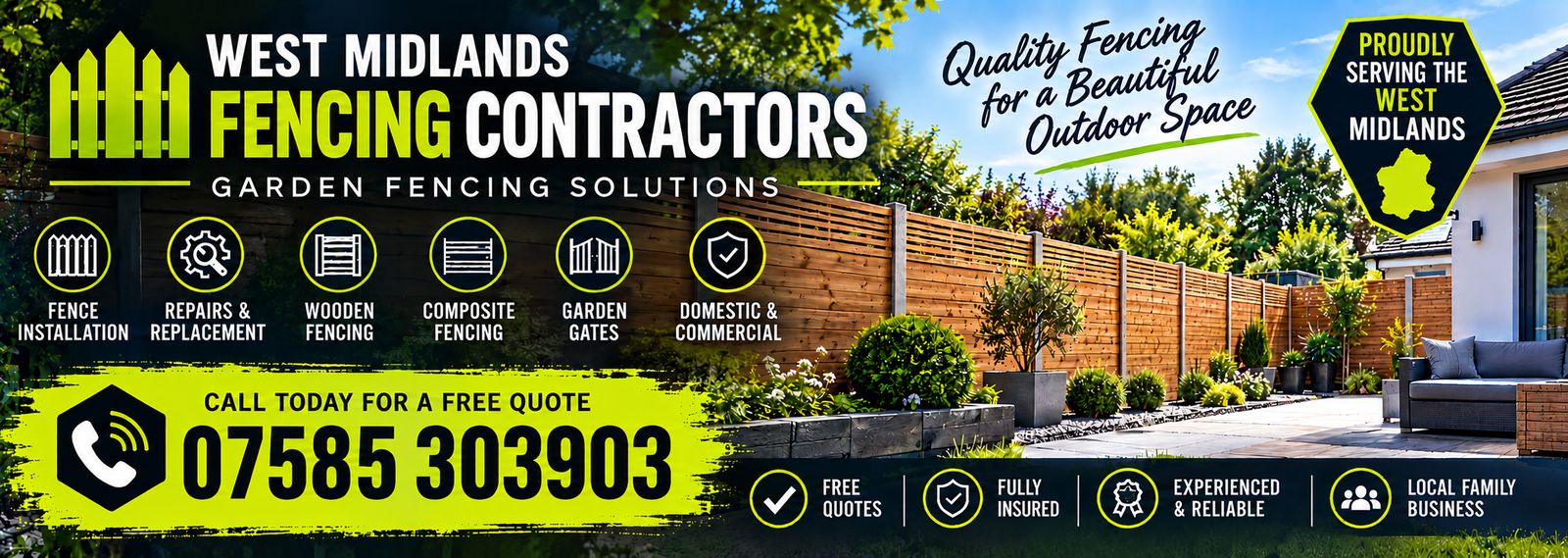

Why long gardens suit horizontal lines
On a long boundary, vertical boards repeat in a narrow pattern, while horizontal slats draw the eye along the run. The effect is calm and modern, and it works as a backdrop for planting. Lawns, borders and a patio all sit well in front of a plain, level wall of timber. On a big plot this effect is stronger than people expect, so it pays to stand back and picture it.
With a larger garden you can also use the fence to divide space, for instance to screen a seating area, a play corner or a vegetable plot. Slats at a slightly open spacing give a lighter divider, and closed slats give a solid, private back to a seating area. A fence used as a divider also needs a gate or opening in the right place.
Spacing, screening and privacy
The gaps decide how much you see through the fence. A tight spacing blocks views almost completely, while a wider gap lets in light but allows glimpses between the boards. Think about where people will stand and sit. A gap that gives privacy from the road may not give it from an upstairs window. A short mock-up with a few boards held against the posts shows the effect before you commit.
It is common to mix the two, closed slats where privacy is needed and a more open pattern elsewhere. Keeping the spacing the same within each section keeps the result looking planned. Mention any overlooked areas of your garden when you contact us and we will suggest what to do. Where one side is overlooked and another is not, it makes sense to vary the spacing.
How horizontal differs from vertical boards
Vertical boards and panels are quicker to put up and are what most people picture. Horizontal slatted fences are built board by board, so more care goes into the frame and the posts. They need closer posts because the long boards can bow, and the finish is only as good as the setting out. That extra work is why horizontal fences usually take longer to put up than panels.
In return you get a stronger visual statement and a look that suits newer or renovated houses. If you want the simplest and most traditional boundary, vertical panels may still be right. For a front or side feature, horizontal slats are worth considering. It is a matter of taste as much as practicality, and we are happy to talk it through.
Quick tips
- Mark out where you sit, entertain and look from, so the spacing can be planned for your actual privacy needs.
- Ask about post spacing, because long slats on widely spaced posts tend to sag and bow after a while.
- Keep climbing plants off the slats, or train them on wires, so the timber can dry out properly.
- Match the gate to the fence style, so the whole boundary looks like one design.
If you are thinking about horizontal slatted fencing in Castle Bromwich, B36, call us or send a photo and the fence location. We also work in Water Orton, Shard End, Coleshill and Bromford, and there is no pressure.
Frequently asked questions
Do horizontal slats suit a large suburban garden?
They can. On a long boundary the level lines draw the eye along the run and make a calm backdrop for planting. In a bigger Castle Bromwich plot they also work as a divider, screening a seating area or play corner.
How wide should the gaps between slats be?
That depends on privacy. Tight spacing blocks views almost completely, while wider gaps let in light but allow glimpses through. Think about where people sit and whether an upstairs window overlooks you. Holding a few boards against the posts shows the effect first.
Garden fencing installers in Castle Bromwich · All advice guides